
Last updated November 22, 2026
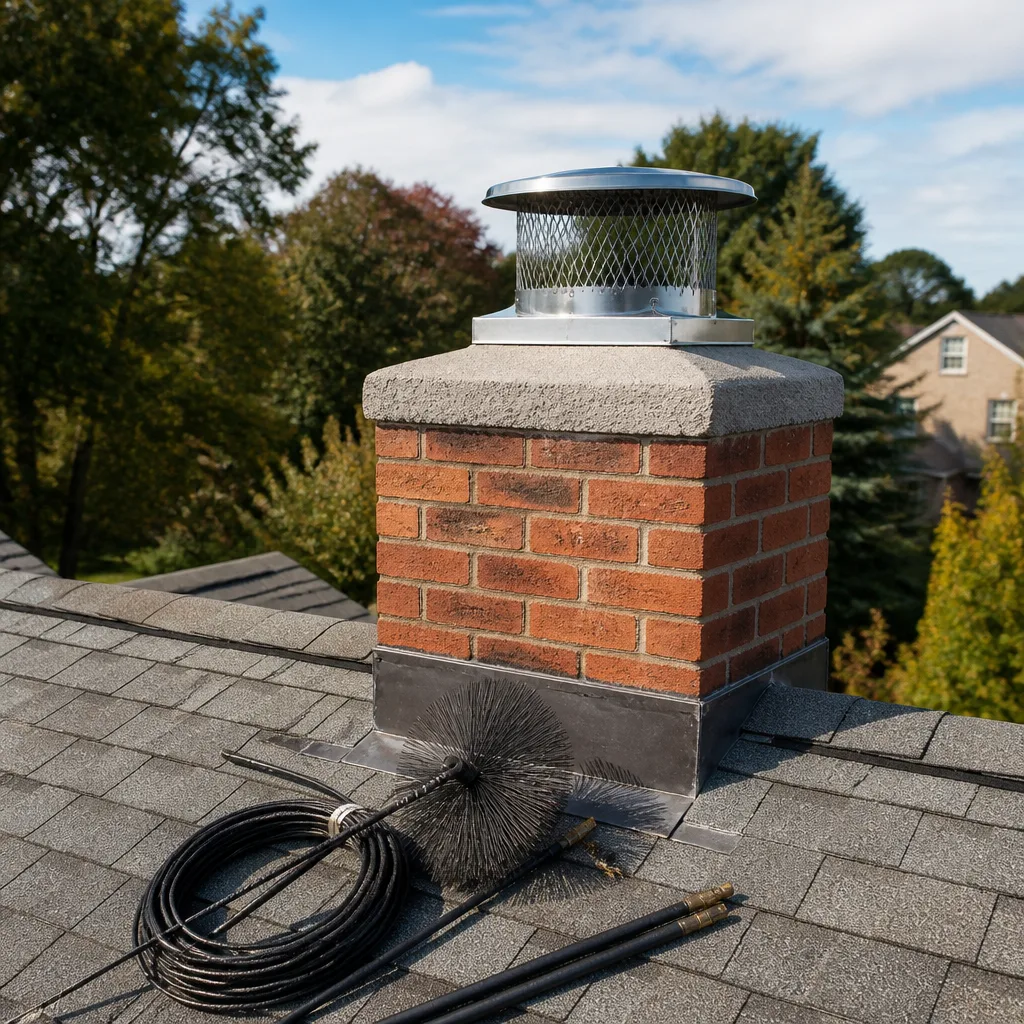 Sweep & inspection
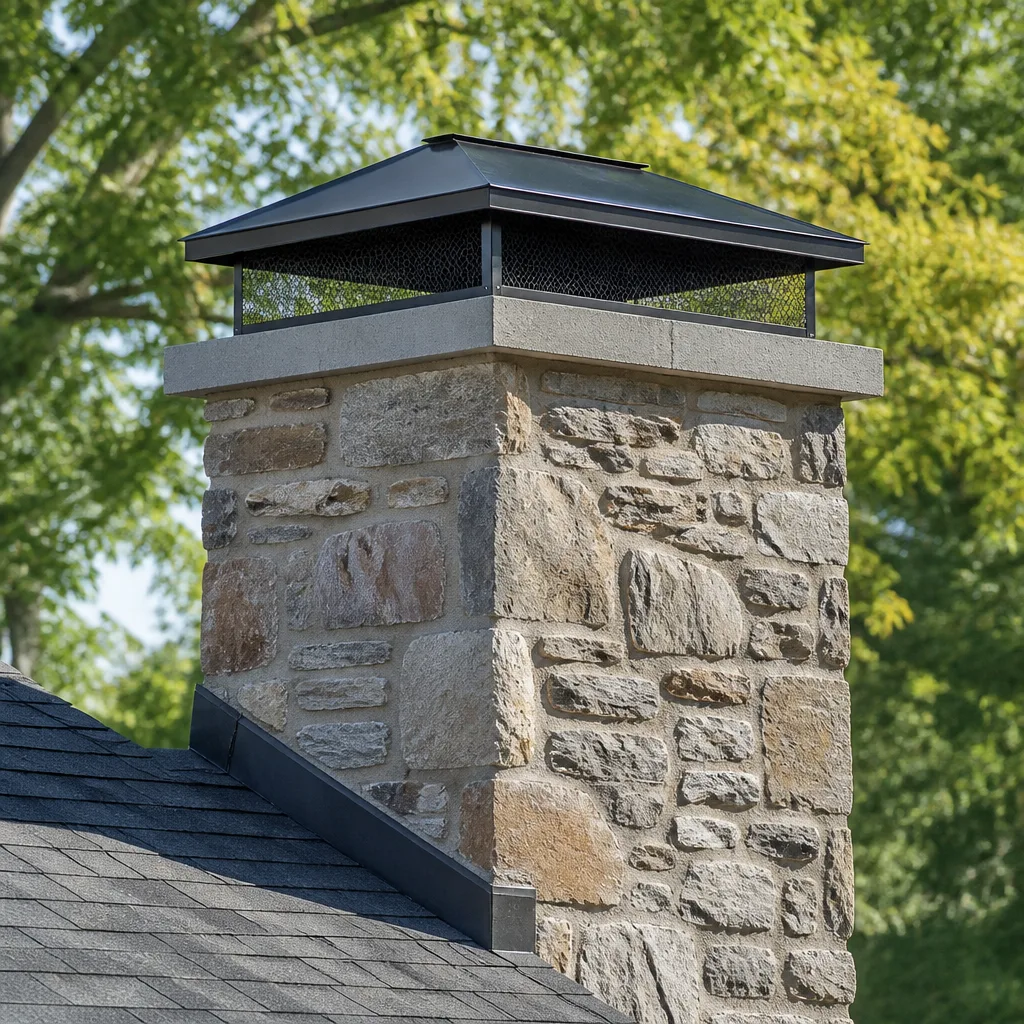 Caps & crowns
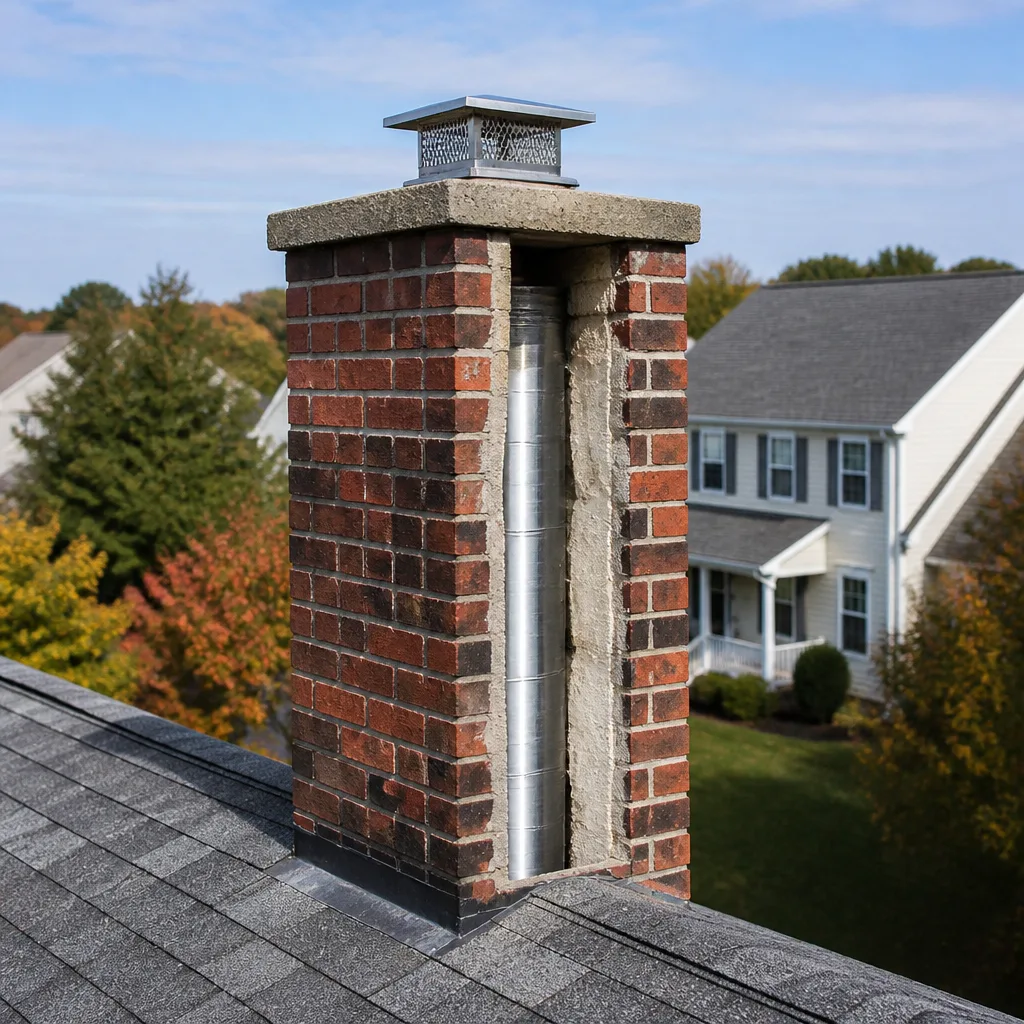 Flue relining
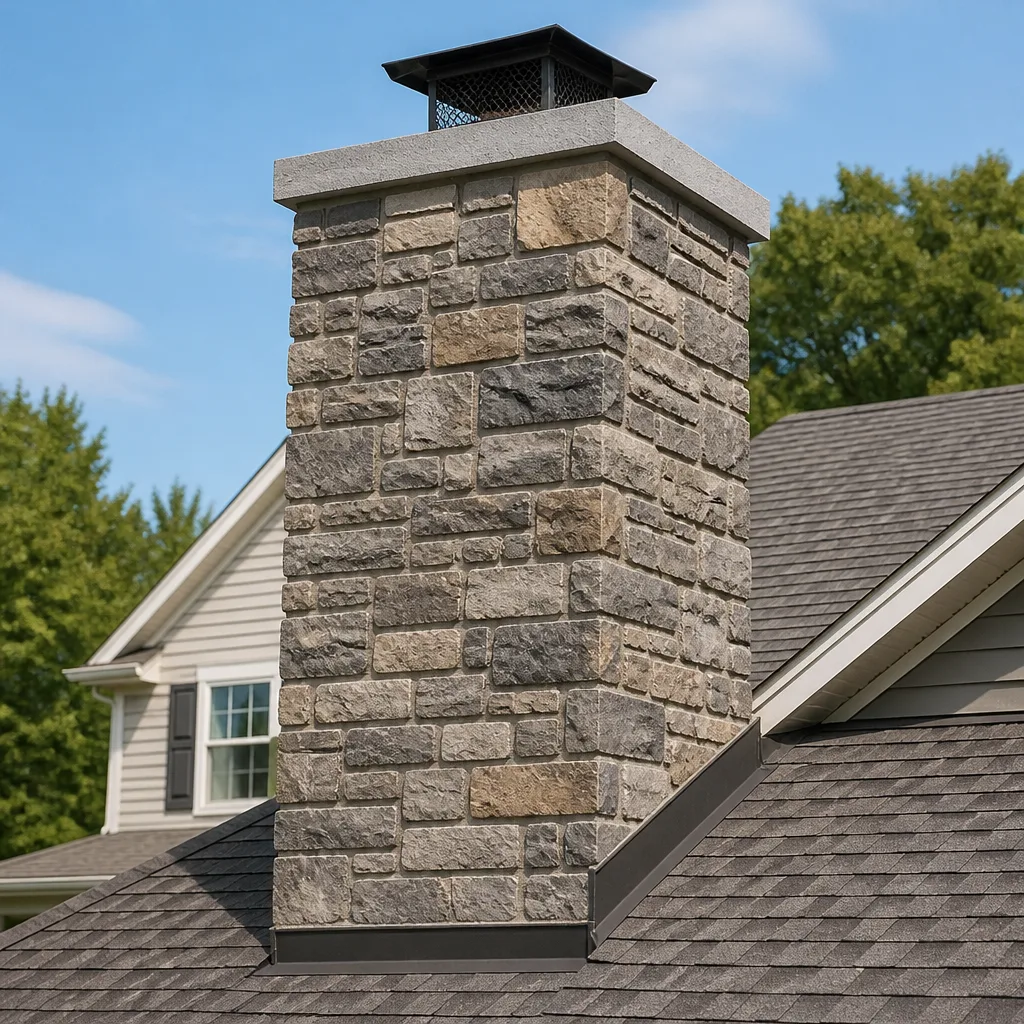 Masonry repair
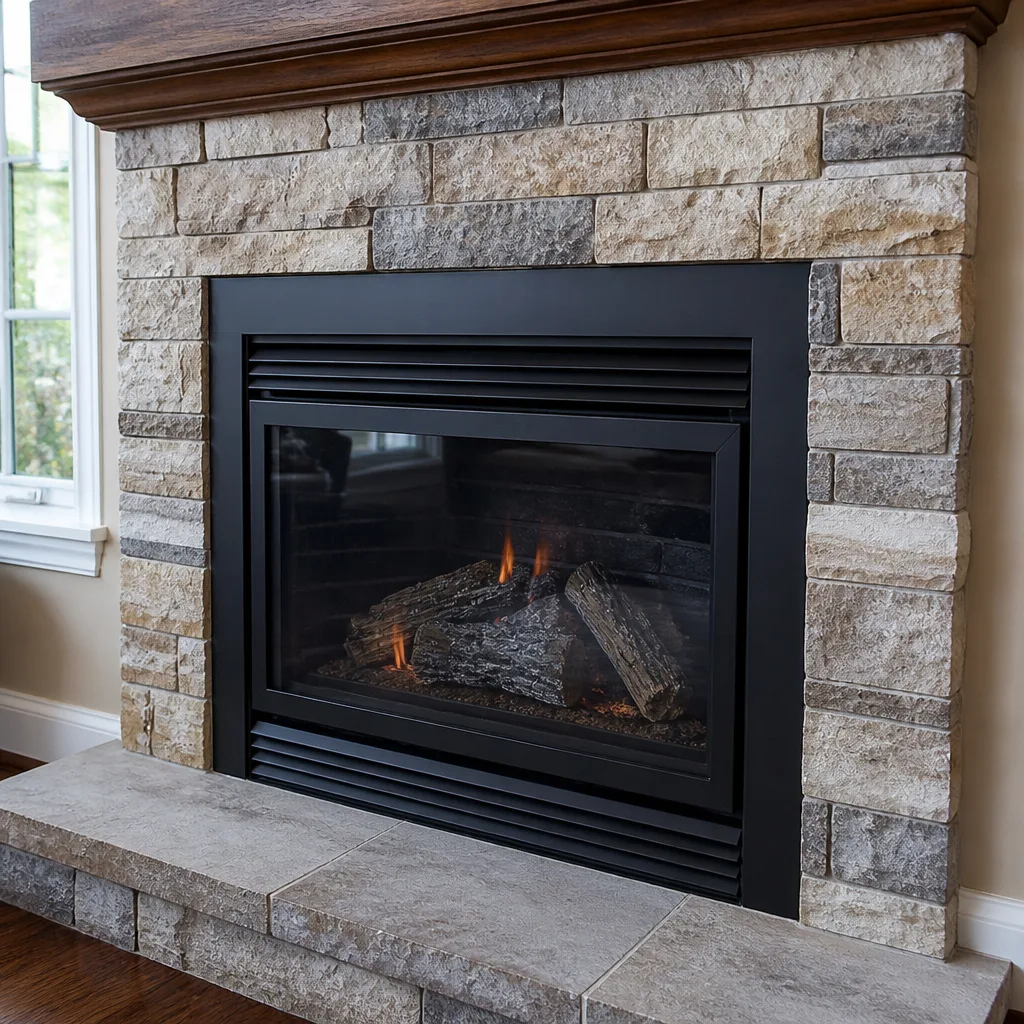 Gas fireplace service
Level 1 sweep and inspection to the NFPA 211 annual standard - flue, crown, cap, and flashing checked and photographed
Chimney sweep logs do not sweep chimneys. They loosen some creosote - which then falls where a brush and vacuum still have to collect it.
DIY vs Professional Chimney Cleaning: The Frankford Homeowner’s Decision Guide
Here’s the part most cleaning guides get wrong: a homeowner can safely sweep a lightly used decorative fireplace with a simple flue brush. But that same brush, run through a flue caked with glazed creosote, doesn’t remove the hazard. It just spreads it around and leaves the dangerous layer in place. The DIY-versus-pro question in Frankford isn’t really a cost debate. It’s a capability question, and the honest answer is that some chimney tasks are genuinely homeowner-appropriate while others aren’t. This guide draws that line clearly, so you know exactly which side of it your fireplace sits on.
Quick Answer
Professional chimney cleaning is the correct choice whenever your chimney has a liner, has seen regular wood burning, or hasn’t had a Level 1 inspection in the last 12 months. DIY sweeping only makes sense for a low-use fireplace you can safely reach, with no liner concerns and a recent inspection on record. In Frankford, where older homes and mixed fuel types are common, most fireplaces fall on the professional side of that line.
Styles & brands we work with
- Sweep & inspection
- Caps & crowns
- Flue relining
- Masonry repair
- Gas fireplace service
Table of Contents
- What “DIY-Appropriate” Actually Means for Chimney Work
- What a DIY Cleaning Cannot Accomplish
- The Equipment Gap: DIY Kits vs. Real Sweeping Tools
- Creosote Stages and Why Glazed Creosote Changes Everything
- Liability and Insurance: The Record That Protects You
- The Five Conditions That Mean You Need a Professional
- How a Professional Cleaning Actually Works
- What Chimney Cleaning Costs in Frankford
What “DIY-Appropriate” Actually Means for Chimney Work
DIY-appropriate is a narrow category. It describes a fireplace that a careful homeowner can clean without creating new risk. To decide whether yours fits, check five things: how often you burn, what you burn, how old the system is, what the liner is made of, and whether a Level 1 inspection has happened in the past 12 months. If you can’t answer all five with confidence, the DIY category doesn’t apply to you yet.
Frequency of use is the first filter. A decorative fireplace lit a handful of times a year builds creosote slowly. A primary heat source burned through the winter builds it fast, and in a pattern no brush handles evenly.
Fuel type matters just as much. A gas log set produces different residue than hardwood. Wood type and moisture content drive creosote formation, and green or unseasoned wood accelerates it. A fire pit or a decorative gas appliance has different cleaning needs than a wood-burning insert.
The age and liner material of the system decide how much margin you have. Older Frankford rowhouses and pre-war homes often have clay-tile liners that chip and crack, and a brush run too aggressively through a failing flue can turn a small defect into a real one. Modern stainless liners, including DuraFlex systems, tolerate cleaning well but still need inspection before you assume they’re sound.
Finally, the inspection record. Without a Level 1 inspection in the last 12 months, no one has confirmed your flue is clean-able from the top down, that the damper works, or that the smoke chamber is intact. Cleaning before inspecting is how homeowners end up sweeping a chimney that shouldn’t be swept yet.
What a DIY Cleaning Cannot Accomplish
A brush and a shop vac remove soot and loose creosote from the flue. That’s the whole list. Everything that actually determines whether your chimney is safe happens around the flue, not inside it, which is one reason Chimney Sweep Frankford treats every sweep as an inspection first.
Here’s what a DIY cleaning leaves undone:
- Liner inspection. Cracks, gaps at the joints, and rusted or separated sections are only visible with a camera or a trained eye from the top. A brush never looks at the liner surface; it just passes through it.
- Smoke chamber assessment. This is the area directly above the damper, where turbulence deposits heavy creosote and where masonry can spall. It’s hard to reach with DIY tools and easy to misread if you don’t know what you’re looking at.
- Cap and crown evaluation. The cap and crown sit at the very top and take weather year-round. A cracked crown lets water into the masonry, and a missing or damaged cap lets birds and rain into the flue. You have to be on the roof to see either one, which is exactly where the inspection happens.
- Creosote staging. A pro learns to recognize the difference between Stage 1 soot, Stage 2 hardened creosote, and Stage 3 glazed creosote. The stage determines the cleaning method. DIY brushing only treats Stage 1 properly.
- Draft and venting checks. Negative pressure, competing exhaust fans, and oversized or undersized flues affect how combustion gases move. Those checks need instruments, not intuition.
Those gaps aren’t small. A liner crack you never saw is a path for carbon monoxide into the living space. A crown crack you never saw is water working its way into the structure all winter. And a glazed creosote layer you brushed and left in place is a fire waiting for the right temperature.
The Equipment Gap: DIY Kits vs. Real Sweeping Tools
The rods and poly brushes sold in big-box kits are designed for light soot in a straight flue. Genuine sweeping equipment is a different category, and the gap between the two is one of the biggest reasons DIY cleaning produces incomplete results.
What a competent sweep typically uses:
- Professional-grade poly and wire brush heads sized to the flue, so the brush contacts the full circumference without gouging a clay liner
- Flexible rods long enough and stiff enough to navigate offsets without whipping around inside the flue
- Industrial HEPA vacuums with pre-filters that hold fine soot instead of blowing it back into the room
- Drop cloths and a runner system that seals the fireplace opening during the sweep
- Inspection cameras for the liner, and a flashlight-and-mirror setup for the smoke chamber
- Extension ladders, roof access equipment, and fall protection for the top-side work
A big-box kit gives you the brush, the rods, and a small vacuum. That’s enough to move soot in a short, straight flue. It is not enough to reach the upper liner on a two-story Frankford home, it’s rarely enough to bend through an offset without damaging the liner, and it does nothing about the top of the chimney where the real weather damage shows up.
When a brush is undersized for the flue, it skips the corners and leaves a ring of hardened creosote on the walls. When it’s oversized, it can chip a clay liner tile. Both outcomes are worse than the state you started in, and both are exactly what a mismatched kit produces.
Creosote Stages and Why Glazed Creosote Changes Everything
Creosote is the residue left when wood smoke cools. It forms in three stages, and each stage needs a different treatment. The stage is the single most important variable in the DIY-versus-pro decision, because Stage 1 and Stage 3 are not the same problem wearing different coats.
- Stage 1: soot and light flaky creosote. The most common stage in a regularly burned fireplace. A poly brush removes most of it. It’s the only stage a homeowner can clean with confidence.
- Stage 2: hardened, crusty creosote. Forms when cooler flue temperatures let more residue condense before it burns off. It clings to the liner walls and needs a rotary cleaning head or chemical treatment to lift. A hand brush mostly polishes it.
- Stage 3: glazed creosote. The hardest stage, and the one that matters most in a fire risk sense. It looks like hard black glass, has high fuel content, and ignites at much lower temperatures than soot. Brushing it can chip the surface but leaves the rest of the layer behind. Removing it takes rotary equipment and often a chemical process, and sometimes the liner is compromised enough that the honest answer is a reline.
In Frankford, the fireplace stock is mixed. Decorative gas fireplaces produce almost no creosote and clean easily. Wood-burning inserts and traditional masonry fireplaces in older homes are where glazed creosote shows up, especially when the flue runs on the exterior wall where it stays cold. Cold flues make Stage 3 more likely, and a DIY brush makes it less visible.
This is the heart of the decision. If you can’t tell what stage your flue is in, you can’t know whether a DIY cleaning helped or just moved soot around the glazed layer. A professional sweep exists to answer that question before anything is brushed.
Liability and Insurance: The Record That Protects You
The insurance angle rarely gets mentioned in DIY chimney guides, and it’s the one with the longest tail. Homeowners insurance claims related to chimney fires can be contested if there’s no professional inspection record for the chimney. That’s the practical reality, and it’s worth understanding before you make the decision purely on cost.
Here’s how it plays out. If a chimney fire damages the roof deck or the interior of the home, your insurer’s adjuster will look for evidence of maintenance. A dated inspection report is the clearest evidence there is. Without one, the claim can be argued as neglect, which can reduce or deny a payout. That’s not a scare tactic, it’s simply how claims documentation works.
There’s a second layer, too. Most homeowners policies put responsibility for chimney maintenance on the homeowner. An inspection report tells you what shape the chimney is in at a point in time. If you have one from this year and damage happens next, the record shows the chimney was in known condition. If you have none, the assumption defaults to the worse case.
Keep the paperwork. A written inspection report with photos is the two-page document that decides whether a claim is easy or hard. For a home in Frankford, where a lot of the housing stock is older and repairs compound, that record matters even more. chimney repair work that’s documented properly also tends to hold up better if you sell the property, because the buyer’s inspector is going to look at the chimney anyway.
This is not a reason to spend on services you don’t need. It’s a reason to get the inspection that confirms what you actually need, and to keep the report.
The Five Conditions That Mean You Need a Professional
If any one of these five conditions applies to your home, professional chimney service is the correct call. This isn’t about being cautious to the point of paralysis. It’s about knowing which situations fall outside the DIY category, and the answer is practical rather than dramatic.
- Your chimney has a liner you haven’t had inspected in the past 12 months. Every liner type, clay, stainless, or cast-in-place, can fail in ways no brush reveals. Annual inspection is the baseline, and if a year has passed without one, that inspection needs to happen before a sweep.
- You burn wood as a primary or secondary heat source. Regular wood burning builds creosote faster than occasional use. That kind of volume means the system needs a pro to stage the creosote and check the smoke chamber at every sweep.
- You’ve seen Stage 2 or Stage 3 creosote, or you can’t tell. Crusty or glazed deposits are outside what a hand brush handles properly. This is exactly where restoration repairs come in, and companies that offer only sweeping hand this off to someone else.
- The chimney is on an exterior wall or a cold chase. Cold flues condense more creosote, and exterior-wall chimneys in older Frankford homes are prone to it. These systems need closer inspection, not just an annual brush.
- There’s been a chimney fire, a lightning strike, an earthquake, or visible damage to the cap or crown. Any of those events means the system needs a structural check before it’s swept. A brush isn’t the right first step after any of them.
If none of those five apply and you have a low-use decorative fireplace, a recent Level 1 inspection, and safe roof access, DIY sweeping is a reasonable choice. That’s a genuinely small group of homes, even in Frankford.
How a Professional Cleaning Actually Works
A proper professional cleaning is an inspection that ends in a sweep, not the other way around. Here’s the typical sequence, and why each step matters.
- Client walkthrough. The technician asks about fuel type, burn frequency, draft complaints, and any smells or smoke back-drafting. The technical picture starts with the homeowner’s observations.
- Level 1 inspection. Reading the visible portions of the firebox, damper, smoke chamber, flue, and exterior through the access points available, without special tools or demolition.
- Roof-side inspection. Cap, crown, flashing, and the top of the liner are checked while the technician is on the roof. Most of the structural information lives up there.
- Set-up and containment. Drop cloths and HEPA vacuum are put in place so the household air isn’t exposed to soot.
- The sweep itself. Brush type and method depend on creosote stage. The right equipment changes based on what the inspection found.
- Camera check and photo report. The liner and smoke chamber are photographed, and you get the images along with the findings. Nothing gets recommended unless the photos back it up.
- Clear recommendations and a written estimate. If work is needed, the price is set per job by the written estimate, and you can see exactly what the work addresses.
The specialist focus matters across every step. A chimney-only company doing this work for every job reads the difference between a crown crack that needs sealing and a chimney chimney cap & crown rebuild faster than a generalist who sweeps as a sideline. That’s not a slogan, it’s what focused diagnostic experience looks like.
When the liner itself has deteriorated but doesn’t need full replacement, restorative liner repair can sometimes be done with HeatShield ceramic processes. That’s a repair-only option that sweep-only companies typically can’t offer. When replacement is the answer, stainless systems from DuraFlex and Copperfield are what we install. The point is that the diagnosis drives the fix, not the other way around.
Every phase of the work stays with a single chimney sweep team, from the first sweep through cap, liner, and rebuild. You don’t get handed to a second contractor partway through.
What Chimney Cleaning Costs in Frankford
Professional chimney cleaning in Frankford generally runs by job, and the written estimate sets the price. For planning, here’s how the kinds of work tend to break out. These ranges are typical estimates, not exact.
- Standard sweep (single flue, wood-burning): a routine sweep is the lowest-cost tier and usually comes with a Level 1 inspection that confirms the flue is worth cleaning.
- Sweep with camera inspection and photo report: adds diagnostic evidence to the visit, and is worth it when there’s any question about liner condition.
- Rotary cleaning for hardened creosote: higher cost tier than a standard sweep because the method and equipment are different.
- Chemical treatment for glazed creosote: a separate tier, sometimes paired with rotary cleaning, sometimes the only way to lift Stage 3 residue safely.
- Cap and crown repair or replacement: priced separately from the sweep, as a structural add-on.
- Liner repair or replacement: priced per job, usually after inspection reveals damage that cleaning alone can’t fix.
What you get for the standard-tier cost is not just a brush and a vacuum. It’s an inspection that either confirms the chimney is fine or tells you what it needs, with photos you can see. That’s the difference between paying for a service and paying for information, and the second is where the real value sits.
Prices in Frankford reflect the local market. Older housing stock with clay liners often needs more diagnostic time than newer construction, and the range reflects that. You won’t get a quote for the standard-liner-replacement cost upfront, because the honest answer depends on what the inspection finds.
Common Mistakes to Avoid
- Cleaning before inspecting. A brush before an inspection sweeps creosote over a liner crack without anyone knowing the crack is there. The sequence matters as much as the work itself.
- Using a big-box kit on a two-story chimney. The rods in most residential kits are too short and too flexible for the length of a Frankford rowhouse flue. You’ll reach part of the liner and miss the rest.
- Sweeping off glazed creosote and assuming the problem is solved. A brush chipped the surface, not removed the hazard. The layer is still in the flue and still has high fuel content.
- Skipping the roof-side check. The cap and crown are where the largest structural problems show up first. A sweep that doesn’t inspect from above is an incomplete sweep, full stop.
- Cleaning a gas or oil flue the same way as a wood flue. Different fuel, different residue, different cleaning method. Treating gas logs like a wood fireplace leads to the wrong approach on every one.
- Not keeping the inspection report. The document is the part your insurer will ask for later. Without it, a claim can be contested even if the chimney was maintained.
- Waiting until the smell tells you it’s time. By the time you notice a chimney smell during Frankford’s fall turn, the creosote has been building all season. Preventative annual inspections exist so you don’t have to rely on your nose.
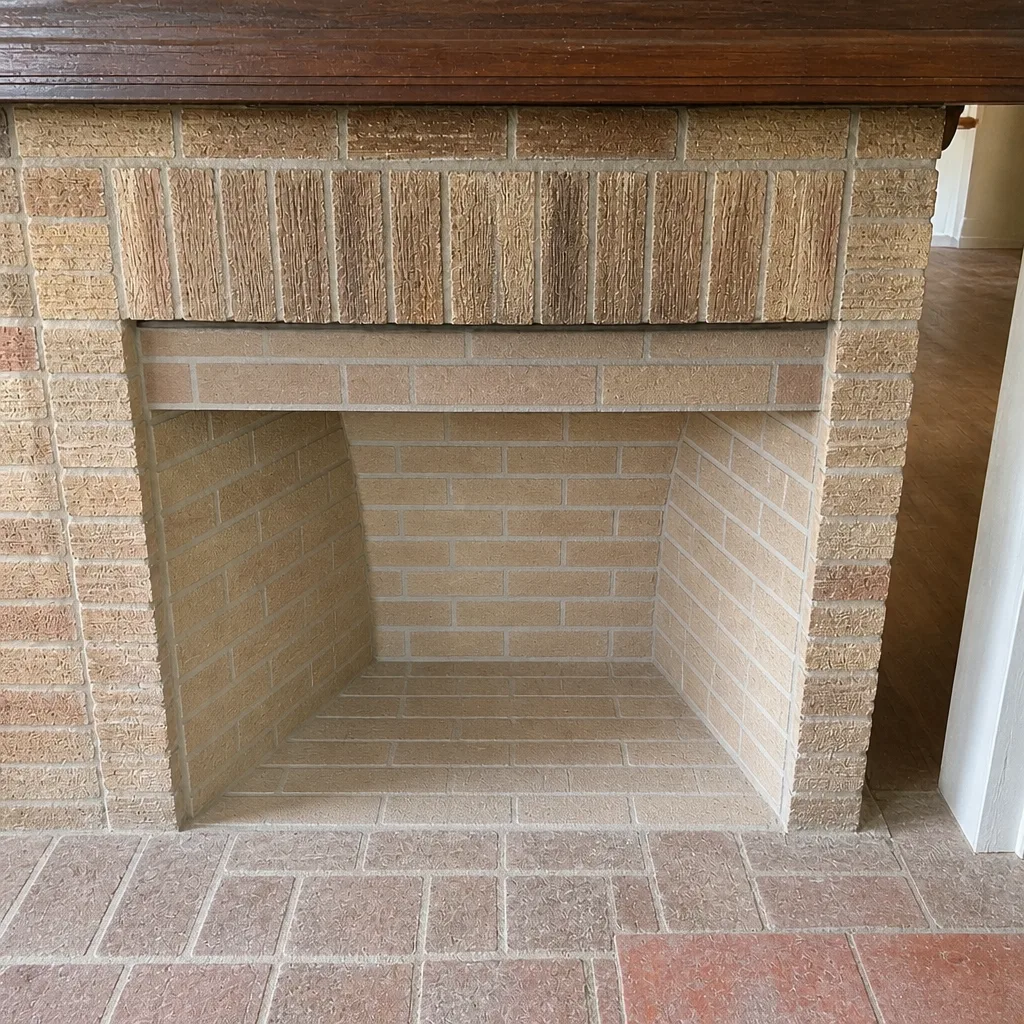
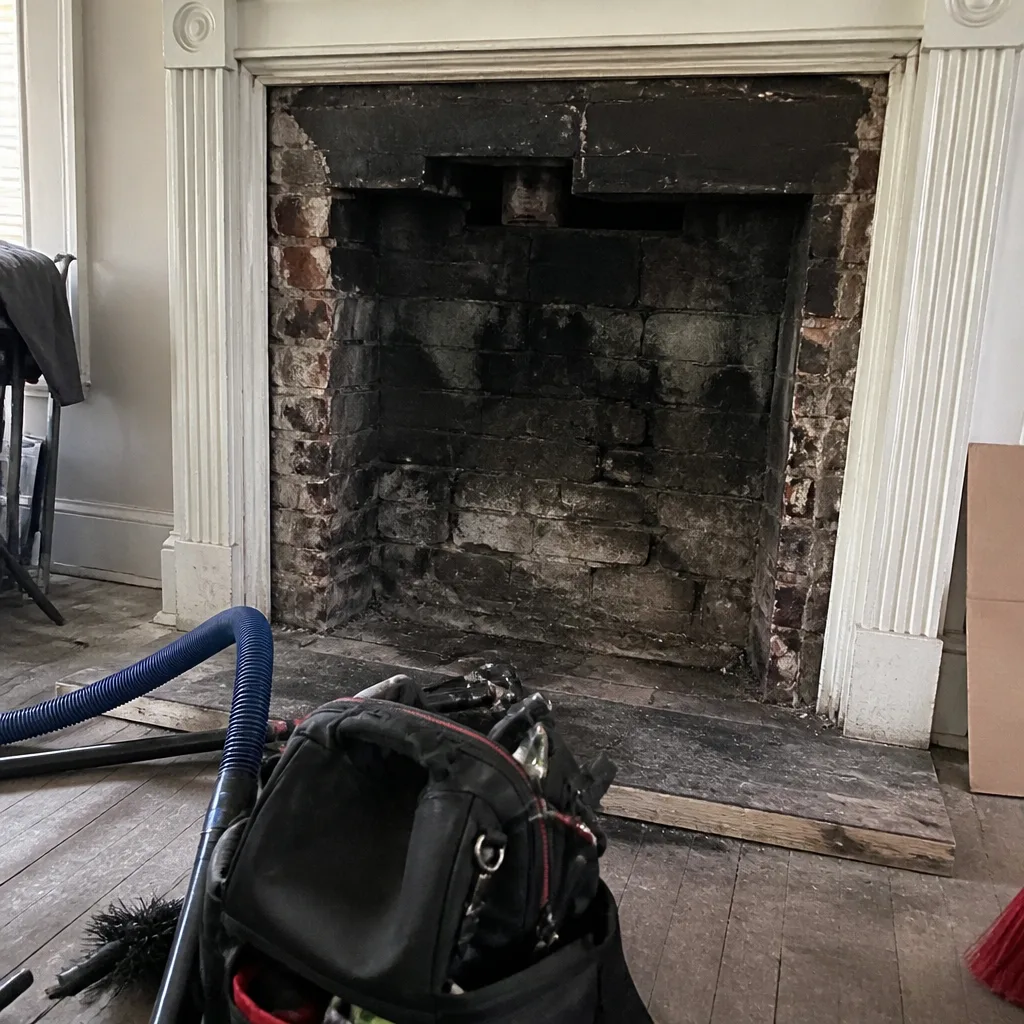
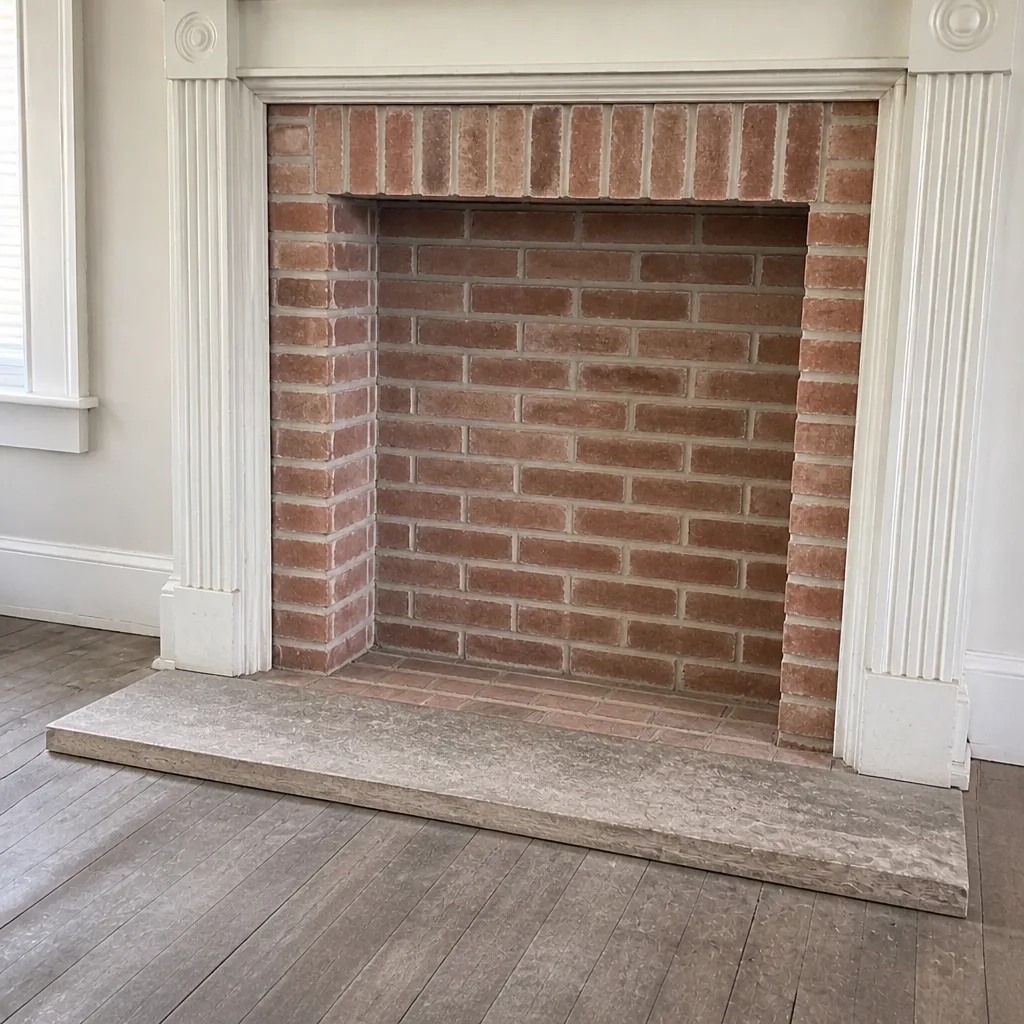
See the difference
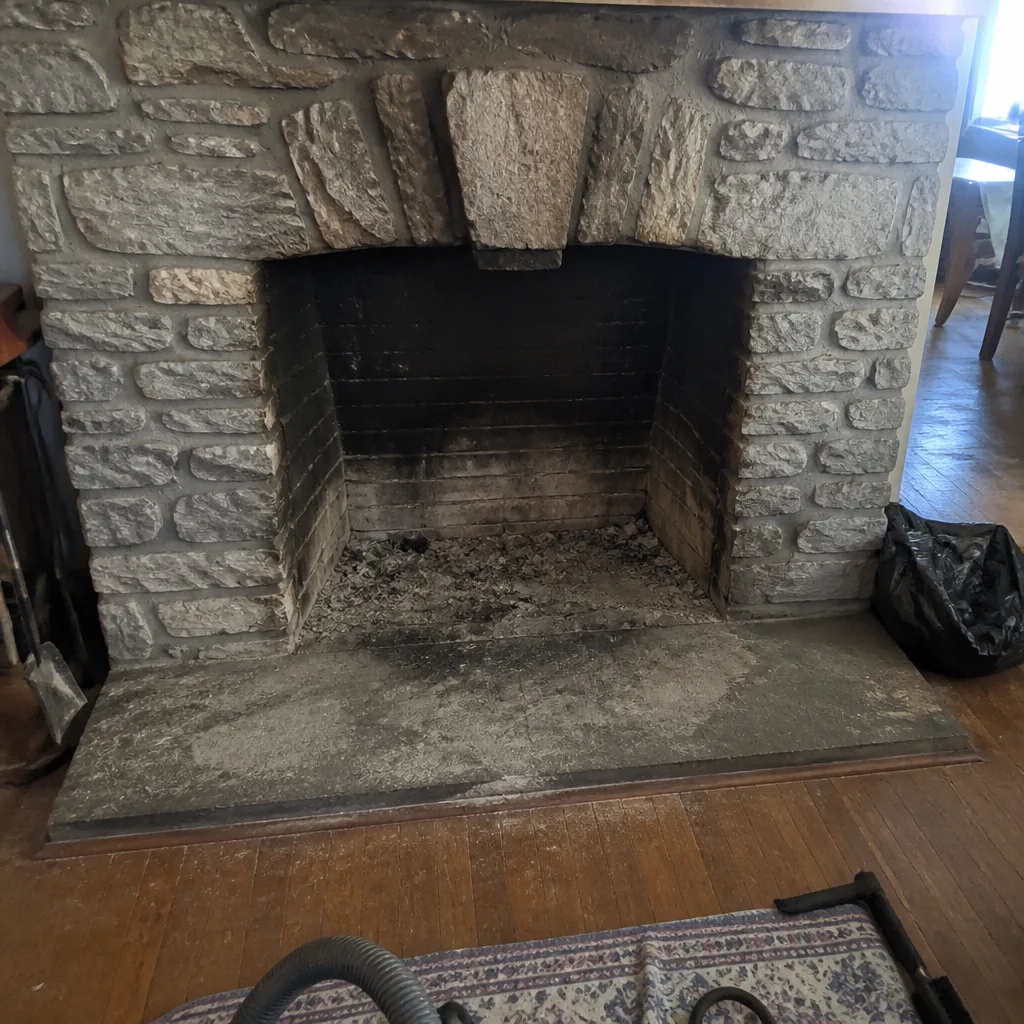 Before
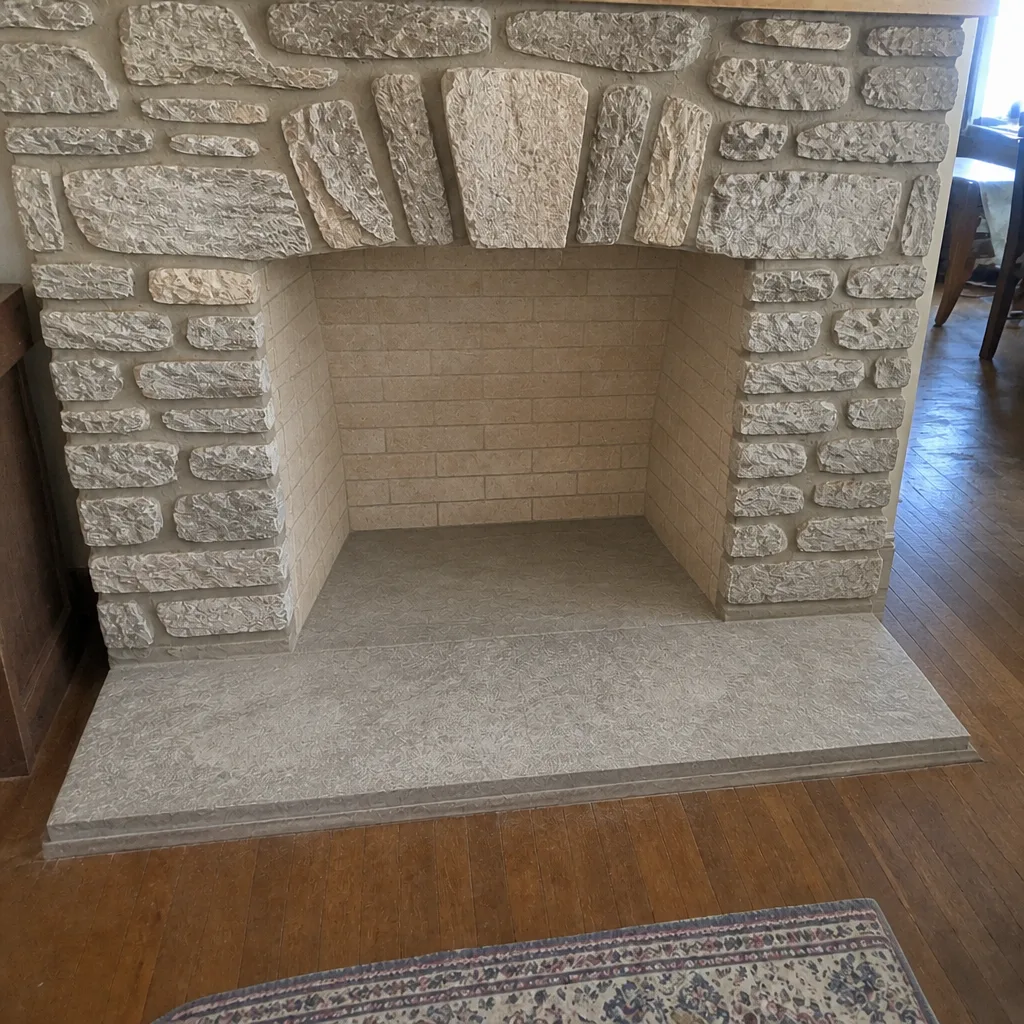 After
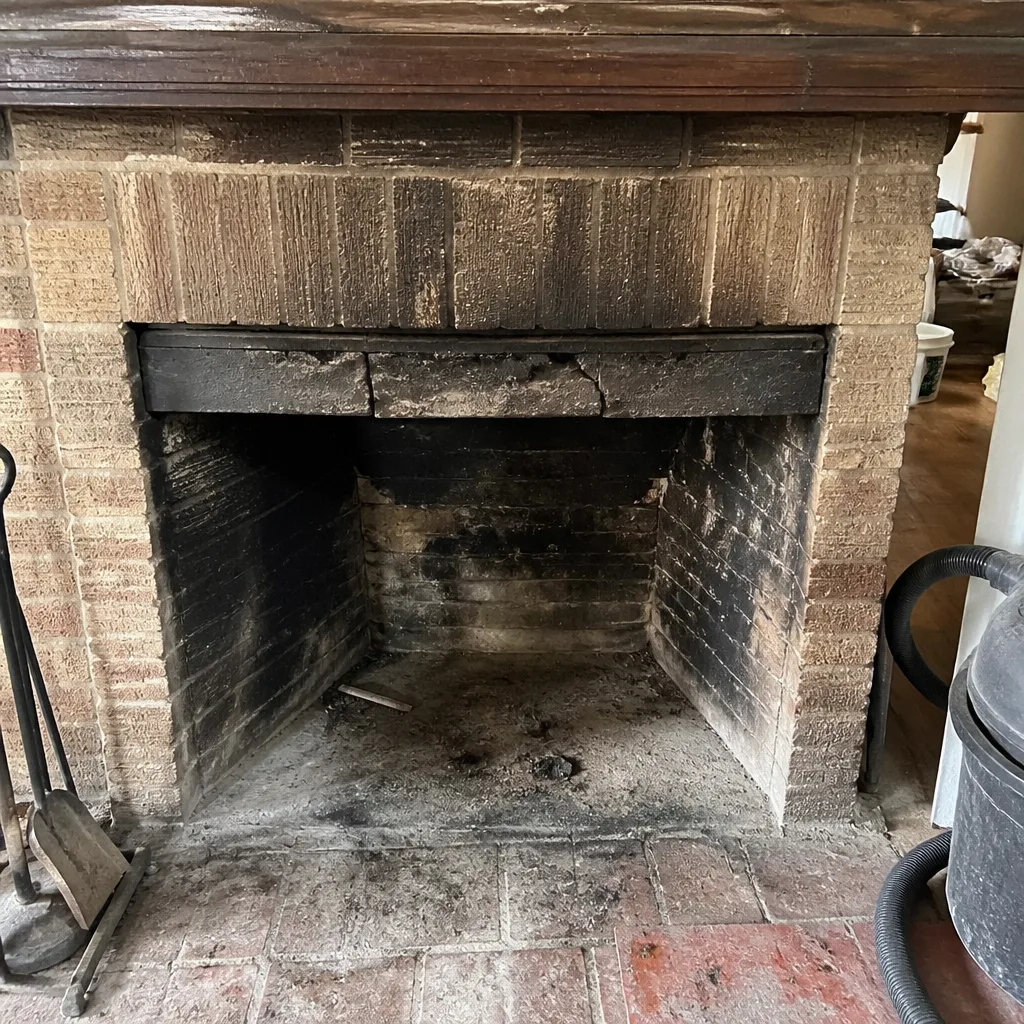 Before
 After
 Before
 After
When to Call a Professional
Less than 12 months on the inspection record, regular wood burning through recent winters, any sign of crusty or glazed deposits, or visible wear on the cap or crown. Those are the practical triggers. A chimney fire, lightning strike, or earthquake in the recent past is an immediate trigger for a structural check. Chimney Sweep Frankford offers free estimates in Frankford. Call (833) 962-9222. We answer 24/7. Fast dispatch from 7am to 7pm, Sunday through Friday. Our technicians have up to 15 years of experience, and every estimate is free before work begins.
Frequently Asked Questions
Chimney sweeping in Frankford is priced per job by the written estimate, with a standard single-flue sweep as the base service tier and rotary or chemical creosote removal priced above it. The final cost depends on what the inspection finds. Call (833) 962-9222 for an exact quote. Estimates are free.
You can safely clean your own chimney only if it’s a low-use decorative fireplace with a recent Level 1 inspection, no liner concerns, and safe roof access. If any of those conditions are missing, professional service is the correct choice because a DIY brush can’t inspect the liner, stage the creosote, or assess the cap and crown. Call (833) 962-9222 if you’re not sure which side of that line you’re on.
You need a new liner only if inspection with camera evidence shows the existing liner is cracked, separated, or otherwise compromised. Nothing is recommended without those photos, and if the liner can be restored with HeatShield ceramic repair rather than replaced, that option is offered. Call (833) 962-9222 and start with the inspection. Estimates are free.
A chimney should be swept whenever the creosote layer reaches the point where a brush is needed, and inspected annually regardless. Most homes fall somewhere in that annual-to-seasonal range depending on burn frequency and fuel type. Call (833) 962-9222 to book a sweep in Frankford and get the inspection that tells you where you actually stand.
If you skip it, creosote keeps building and moves toward a higher stage, and the liner and crown problems that inspection would have caught go unnoticed for another season. The two outcomes that matter most are chimney fire risk and carbon monoxide moving into the living space through a compromised liner. Call (833) 962-9222. Estimates are free, and it’s better to check than to guess.
We tell you when work can safely wait whenever the inspection shows no immediate risk. Cleaning can be scheduled for the next season, crown repairs can often be planned, and liner work can go on a timeline when the camera evidence doesn’t show compromise. The photos are the deciding factor, and you get to see them. Call (833) 962-9222 for the inspection and honest recommendations. Estimates are free.
The Bottom Line
DIY chimney cleaning is a legitimate option, but it’s a small one. It works for low-use decorative fireplaces with a recent inspection and no liner concerns. It fails the moment there’s real creosote, an uninspected liner, or any roof-side damage, because a brush can’t tell you the things that actually matter. The practical answer for most Frankford homes is professional service, done as an inspection first and a sweep second, with camera evidence and a written report you can keep. Call (833) 962-9222 for a free estimate. We answer 24/7, with fast dispatch from 7am to 7pm, Sunday through Friday.
Written by the team at Chimney Sweep Frankford.